ABCDE Method: How to Prioritize Tasks Across Multiple Jobs and Projects Without Stress
Master the ABCDE method for prioritizing tasks across multiple projects. Step-by-step guide, real examples, and how to apply it without complex tools.
Imagine it’s 9:00 AM, and your task list looks like a hydra with a thousand heads: the report for Client A is due today, Project B has been stalled for weeks, an email from Vendor C demands an urgent response, and your boss just added an impromptu meeting. Where do you even start? This is where the ABCDE method for prioritizing tasks becomes your lifeline. Unlike other systems that merely sort tasks by urgency or importance, the ABCDE method forces you to make clear decisions, eliminating analysis paralysis. It’s not magic—it’s a system proven by executives, freelancers, and teams juggling multiple fronts, and its greatest strength is that it works even when everything seems like a priority.

What Is the ABCDE Method and Why It Works Better Than Other Techniques
The ABCDE method was popularized by Brian Tracy in his book Eat That Frog!, but its origins trace back to military and business management techniques from the 1950s. The premise is simple: assign each task a letter (A, B, C, D, or E) based on its impact on your goals, then execute them in that order. The key lies in the forced hierarchy: you can’t have two tasks with the same letter, which compels you to choose what truly deserves your attention.
Why does this system outperform others like the Eisenhower Matrix or time-blocking? Because it removes ambiguity. The Eisenhower Matrix, for example, sorts tasks into four quadrants (urgent/important), but it doesn’t tell you what to do when everything lands in the same quadrant. The ABCDE method, on the other hand, forces you to rank even within what’s important. Plus, it’s scalable: it works just as well for a list of 10 tasks as it does for 100, which is crucial when managing multiple jobs or projects.
The 5 Categories of the ABCDE Method (With Real Examples)
- A: Critical Tasks (No Excuses). These are tasks that, if not done today, will have serious consequences: losing a client, missing a legal deadline, or damaging your reputation. Example: Submit the contract draft to Client X by 5:00 PM or Reply to the vendor’s email about the delivery delay. Golden Rule: If you have more than 2-3 A tasks, you’re doing something wrong. Reassess whether they’re truly critical or if you’re confusing urgency with importance.
- B: Important Tasks (But Not Critical). These contribute to your long-term goals but don’t have an imminent deadline. Example: Plan the marketing strategy for the next quarter or Review the team’s feedback on the new product. Common Mistake: Letting B tasks turn into A tasks due to procrastination. If a B task has been on your list for weeks, ask yourself if it’s truly important or just a disguised distraction.
- C: Nice-to-Do Tasks (But Dispensable). These are tasks you’d like to do but don’t significantly impact your results. Example: Organize your computer files or Read that article about design trends. Tip: If a C task is eating into time for an A or B task, eliminate it or schedule it for a low-energy moment (like after lunch).
- D: Delegable Tasks. These are tasks someone else can do just as well—or better—than you. Example: Send scanned documents to the accountant or Schedule a meeting with the development team. Key Insight: Delegating isn’t just for managers. If you’re a freelancer, think about tools (like automated templates) or external collaborators (virtual assistants) who can free you from these tasks.
- E: Eliminable Tasks. These add no value and only consume your time. Example: Checking social media every hour or Attending meetings with no clear agenda. Test: If an E task has been on your list for over a month, delete it without mercy. If you haven’t done it by now, it’s because you don’t need it.
Prioritizing isn’t about choosing between good and bad, but between what’s important and what’s urgent disguised as important.
How to Apply the ABCDE Method Step by Step (With Examples for Multiple Jobs)
Step 1: Create a Master List of All Your Tasks
The first mistake is applying the ABCDE method to partial lists. If you manage multiple jobs (e.g., a full-time job, a freelance project, and personal tasks), consolidate all tasks in one place. Use a piece of paper, a whiteboard, or a tool like How to sync Notion, Linear, and GitHub tasks in one list without migrating data to centralize everything. Example of a master list:
- Finish the monthly report for Client A (freelance work)
- Prepare the presentation for the marketing team meeting (full-time job)
- Call the plumber to fix the leak (personal tasks)
- Review the pull request on GitHub (open-source project)
- Buy birthday gifts for my sister (personal)
Step 2: Assign a Letter to Each Task (No Exceptions)
Now, classify each task according to the ABCDE categories. Non-negotiable rule: You can’t have two tasks with the same letter at the same level. If two tasks seem equally important, choose one as A and the other as B. Example applied to the list above:
- A: Finish the monthly report for Client A (due today and affects income)
- B: Prepare the presentation for the marketing team meeting (important for the job, but the meeting is in 3 days)
- C: Review the pull request on GitHub (useful, but not critical)
- D: Call the plumber to fix the leak (can be delegated to a family member or maintenance service)
- E: Buy birthday gifts for my sister (can be done anytime or delegated)
Step 3: Execute in Order (No Skipping)
The ABCDE method only works if you follow it to the letter. Execution order: A → B → C → D (delegate) → E (eliminate). Common Mistake: Starting with a C task because it’s easier or more enjoyable. If you do that, you’re sabotaging the system. Example of a daily schedule:
- 9:00 - 11:00 AM: Task A (report for the client)
- 11:00 AM - 12:30 PM: Task B (presentation for the marketing team)
- 12:30 - 1:00 PM: Task D (call the plumber and delegate)
- 1:00 - 2:00 PM: Break (eliminate distractions like social media, Task E)
- 2:00 - 3:00 PM: Task C (review pull request, if time remains)
Step 4: Review and Adjust at the End of the Day
At the end of the day, review which tasks remain pending and why. Key Questions:
- Did any A task become urgent due to procrastination? If so, identify the pattern (fear of failure? lack of clarity?) and act on it.
- Are the B tasks still important, or have they become irrelevant? If the latter, eliminate them.
- What D tasks did you delegate, and how did it go? If the delegate didn’t deliver, evaluate whether you need to change your strategy (improve instructions, choose someone else).
Common Mistakes When Using the ABCDE Method (And How to Avoid Them)
Mistake 1: Confusing Urgency with Importance
An email marked "URGENT" isn’t always an A task. Key Question: What happens if I don’t do this today? If the answer is "nothing serious," it’s probably a B or even a C. Example: A client asks for a change in a design that’s already approved. If the delivery deadline is in a week, but the client marks it as urgent, assess whether it’s truly critical or just their preference.
Mistake 2: Not Delegating Out of Fear of Losing Control
Many professionals fall into the trap of wanting to do everything themselves. Solution: Start by delegating small, low-risk tasks (like sending an email with clear instructions or using an automated template). If you’re a freelancer, hire a virtual assistant by the hour for administrative tasks. Rule: If someone can do a task at 80% of your quality, delegate it.
Mistake 3: Letting C Tasks Drain Your Energy
C tasks are the most dangerous because they’re often the most satisfying (organizing, learning something new, etc.). Tip: Schedule a specific time block for them, like Friday afternoons when your energy is lower. Use techniques like How to Use the 5-Second Rule to Stop Procrastinating and Boost Productivity Across Multiple Jobs to avoid falling into them during key moments.
How to Combine the ABCDE Method with Other Productivity Techniques
ABCDE + Time-Blocking: The Perfect Duo
Time-blocking involves assigning specific time blocks to each task. Combine it with the ABCDE method to prevent B or C tasks from stealing time from A tasks. Example:
- 9:00 - 11:00 AM: Block A (critical tasks, no interruptions)
- 11:00 AM - 12:30 PM: Block B (important tasks, with flexibility)
- 12:30 - 1:00 PM: Block D (delegate tasks)
- 2:00 - 3:00 PM: Block C (nice-to-do tasks, if time remains)
ABCDE + 1-3-5 Rule: For Overwhelming Days
The 1-3-5 rule suggests choosing 1 big task, 3 medium tasks, and 5 small tasks each day to maintain focus. Use it alongside the ABCDE method for days with many A tasks. Example: If you have 5 A tasks, pick 1 as the most critical (the one you’ll do first), 3 as secondary (to be done afterward), and 1 as backup (if time allows). This prevents overwhelm. More details in How to Apply the 1-3-5 Rule for Productivity Across Multiple Jobs Without Feeling Overwhelmed.
Tools to Apply the ABCDE Method (Without Complications)
You don’t need expensive software to use the ABCDE method. These options work just as well:
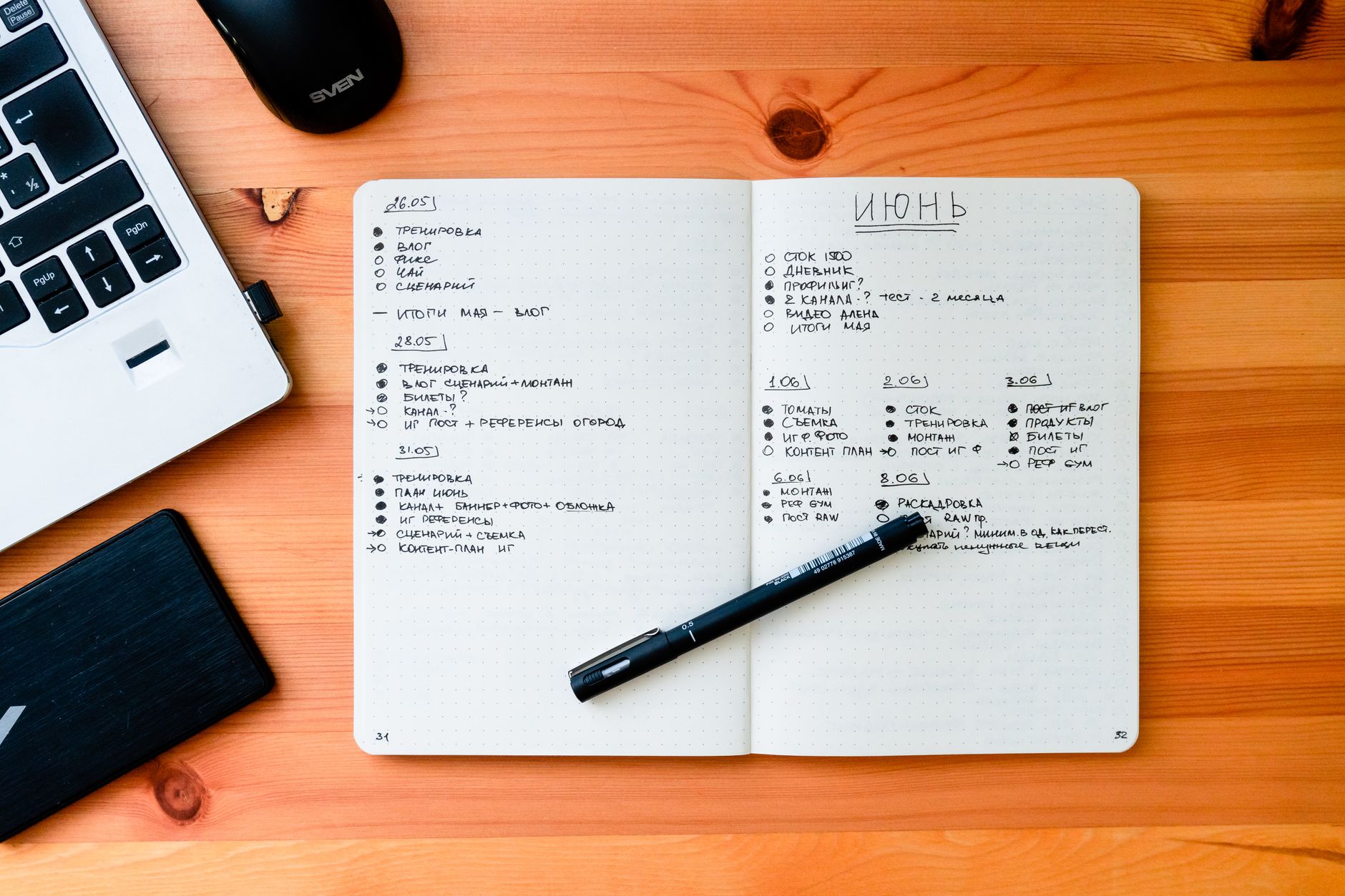
- Pen and Paper: Ideal for those who prefer analog. Use colors for each letter (red for A, blue for B, etc.) and cross off tasks as you complete them.
- Spreadsheets: Create a table with columns for the task, the ABCDE letter, and the status (pending/in progress/done). Example in Google Sheets or Excel.
- Task Apps: Tools like Todoist, Trello, or Foco allow you to label tasks by priority. In Foco, for example, you can use the priority field (normal, important, urgent) to reflect A, B, and C letters, and the status (To Do/Doing/Done) to manage workflow.
The ABCDE Method in Practice: Real Case of a Freelancer with 3 Projects
Maria is a graphic designer managing three simultaneous projects: a brand redesign for a client (Project A), an online course she’s creating (Project B), and administrative tasks for her business (Project C). Her task list for the week included:
- Deliver the final logo to the Project A client (due in 2 days)
- Record Module 2 of the online course (no deadline)
- Send pending invoices to 3 clients
- Update the portfolio with recent work
- Reply to 15 emails from potential clients
Using the ABCDE method, Maria classified her tasks as follows:
- A: Deliver the final logo to the Project A client (critical for income and reputation).
- B: Record Module 2 of the online course (important for her growth, but not urgent).
- C: Update the portfolio with recent work (useful, but not a priority).
- D: Send pending invoices (delegable to her virtual assistant).
- E: Reply to 15 emails from potential clients (eliminable: she created an automated FAQ response).
Result: Maria delivered the logo on time, recorded the course module in a reserved time block, and delegated the invoices. The emails were reduced to 3 manual replies (the most relevant ones), and she updated her portfolio on a Friday afternoon. Lesson: The ABCDE method doesn’t just prioritize—it helps you say "no" to what doesn’t add value.
How to Use Foco to Apply the ABCDE Method Across Multiple Jobs
If you manage multiple projects or clients, a tool like Foco can simplify applying the ABCDE method. For example:
- Organize by Workspaces: Create a container for each project or client (e.g., "Client A - Redesign," "Online Course," "Administration"). This way, when you enter Focus mode, you’ll only see tasks for that workspace, avoiding distractions.
- Prioritize with Colors: Use the priority field to reflect ABCDE letters (urgent = A, important = B, normal = C). In Panorama mode, you’ll see all tasks with their color, allowing you to quickly identify what needs attention.
- Filter by Dates: If an A task has a due date (e.g., today at 10:00 AM), it will appear in the calendar and in the "Today" section of the List view. This ensures you don’t miss critical tasks.
- Delegate with Responsibility: Assign D tasks to collaborators (e.g., your virtual assistant) and use the assignees field to track progress.
- Eliminate the Unnecessary: E tasks can be archived or deleted directly. If you use voice capture, Foco transcribes and automatically detects priorities, helping you classify tasks quickly.
The ABCDE method doesn’t depend on a tool, but if you work across multiple fronts, Foco helps you stay organized without losing sight of what truly matters. Try creating a workspace called "ABCDE Priorities" and use the List or Kanban views to visualize your tasks by letter. This way, every morning, you’ll know exactly where to start.
FAQ
Is the ABCDE method useful for personal tasks or just work?
It works for both. You can apply it to your grocery list, personal projects, or even daily decisions (e.g., choosing which movie to watch). The key is defining what’s critical (A) in each context. For example, "Pay the electricity bill" would be an A, while "Watch a new series" would be a C.
What if all my tasks are A?
If everything seems critical, you’re confusing urgency with importance. Review each task and ask: What happens if I don’t do this today? If the answer is "nothing serious," lower its priority to B. If everything is truly A, divide your day into blocks and use techniques like time-blocking to assign time to each without overloading yourself.
How do I apply the ABCDE method in a team?
In teams, the ABCDE method helps align priorities. Each member classifies their tasks, then reviews them together to avoid duplicates or conflicts. Use a collaborative tool where everyone can see the assigned letters. For example, in Foco, you can invite your team to a workspace and assign tasks with clear priorities.
Is the ABCDE method compatible with Agile or Scrum?
Yes, but with adaptations. In Agile, A tasks would be the sprint backlog items with the highest business value, while B and C tasks would be improvements or lower-priority tasks. Use the ABCDE method to refine the product backlog and decide what goes into the next sprint.
What if a B task suddenly becomes urgent?
Reevaluate its priority. If it becomes critical, upgrade it to A. If it’s just urgent for someone else (e.g., an impatient client), keep its original priority and communicate the real deadline. The ABCDE method gives you arguments to negotiate deadlines: if everything is A for the client but not for you, it’s a sign expectations need adjusting.
Try Foco
Every task from every job in one place. Free to start.