Context-Based Time-Blocking for Multiple Jobs: The Ultimate Guide to Organizing Your Day by Task Type
Learn how to apply context-based time-blocking to manage creative, administrative, and meeting tasks across multiple jobs. Step-by-step guide with real examples.
Context-based time-blocking isn’t just about dividing your day into time slots—it’s about assigning each block to a type of task (creative, administrative, meetings) and a specific job (Client A, Project B, personal tasks). When you juggle multiple jobs, this technique prevents you from jumping between tasks without finishing anything or spending hours on urgent but unimportant work. The key lies in grouping similar tasks by their nature and context, not just by priority or deadline. For example, answering emails from three different clients in one block is inefficient: each requires a different tone, tools, and focus. Instead, if you reserve a block for administrative tasks for Client X, another for creative work on Project Y, and another for meetings, your brain adapts better to the rhythm of each activity.

Why Traditional Time-Blocking Fails with Multiple Jobs
Classic time-blocking (assigning each task to a time slot) works well when you have a single job or very similar projects. But when you manage multiple jobs with different contexts—for example, designing a website for one client, preparing a presentation for another, and handling invoices for a third—the method breaks down. Why? Because it doesn’t account for two critical factors:
- Mental context switching: Jumping from a creative task to an administrative one or from one client to another requires a cognitive 'reset.' Internal studies from companies like Microsoft and Google have measured that this switch can steal up to 40% of productivity in a workday.
- Different tools and environments: Writing a report (you need Word, data, and silence) isn’t the same as designing a logo (you require Photoshop, inspiration, and music). Mixing these tasks in the same block forces you to set up and put away materials constantly.
- Energy and focus: Creative tasks usually demand more mental energy in the morning, while administrative tasks can be done with less effort during low-energy moments. Traditional time-blocking ignores these natural rhythms.
Context-based time-blocking solves these problems by grouping tasks not just by time, but by type of effort and work context. So, instead of blocking '9:00-10:00: check emails,' you block '9:00-10:00: administrative tasks for Client A (emails, invoices, contracts).' This reduces the friction of switching tools, mindset, and objectives every hour.
How to Apply Context-Based Time-Blocking: Step by Step
1. Identify the Contexts of Your Jobs
Start by listing all your active jobs or projects and classify them by their primary context. Don’t label them by topic (e.g., 'marketing,' 'design'), but by the type of task that predominates in each. For example:

- Creative context: Projects that require idea generation, design, writing, or solving complex problems (e.g., developing an ad campaign, writing an article, programming a new feature).
- Administrative context: Repetitive, bureaucratic, or management tasks (e.g., answering emails, updating spreadsheets, invoicing, reviewing contracts).
- Meeting context: Any work that involves coordination with others (e.g., client calls, team meetings, progress reviews).
- Learning context: Projects that require research, studying, or training (e.g., learning a new programming language, preparing a course).
If a job mixes multiple contexts (e.g., a development project that includes creative programming and daily meetings), split it into subcontexts and assign them separate blocks. For example: 'Monday 10:00-12:00: creative development (Project X)' and 'Tuesday 3:00-4:00: meetings (Project X).'
2. Assign Colors and Labels to Each Context
Use a visual system to differentiate contexts. For example:
- Blue: Administrative tasks (emails, invoices, paperwork).
- Green: Creative tasks (design, writing, brainstorming).
- Red: Meetings or coordination with others.
- Yellow: Learning or research.
These colors will help you identify at a glance what type of block you have at any moment and avoid mixing contexts. If you use a digital tool, set it up so tasks or blocks appear in the color of their context. If you work on paper, use colored markers or sticky notes.
3. Block Contexts First, Then Tasks
Instead of assigning individual tasks to time blocks, start by reserving time slots for each context. For example:
- Monday:
- - 8:00-10:00: Creative context (Project A).
- - 10:00-11:00: Administrative context (Client B).
- - 11:00-12:00: Meetings (Client C).
- Tuesday:
- - 9:00-11:00: Creative context (Project D).
- - 11:00-12:00: Learning context (online course).
Within each block, assign the specific tasks that correspond to that context. For example, in the 'Creative context (Project A)' block, you might include: 'Write article draft,' 'Design landing page mockup,' and 'Review client feedback.' The advantage of this approach is that you don’t need to plan every task in detail days in advance: you just need to know what context is next and choose the pending tasks of that type.
4. Adjust Blocks Based on Your Energy and Deadlines
Not all contexts require the same energy or have the same deadlines. Follow these rules to optimize your blocks:
- Place creative contexts in your high-energy hours: If you’re more productive in the morning, reserve that time for tasks that require deep focus (e.g., writing, designing, programming). Save administrative or meeting contexts for after lunch, when your energy usually dips.
- Group similar tasks by deadline: If you have administrative tasks with near deadlines (e.g., invoices due this week), block them together on the same day. This avoids constant interruptions for urgent errands.
- Include buffers between blocks: Leave 10-15 minutes between blocks of different contexts to rest, review notes, or prepare for the next context. For example, if you’re switching from a creative block to a meeting, use that time to review the agenda or grab a coffee.
Real Example: A Day with Context-Based Time-Blocking for 3 Jobs
Imagine you’re a freelancer managing three jobs at once:

- Client A (marketing agency): Design a campaign for a new product (creative context).
- Client B (startup): Handle invoices, contracts, and emails (administrative context).
- Personal project: Write an article for your blog (creative context).
Here’s how you could organize your day with context-based time-blocking:
- 7:30-8:00: Planning (review agenda, prioritize tasks).
- 8:00-10:00: Creative context (Client A: design slogan and campaign sketches). Color: green.
- 10:00-10:15: Break (walk, stretch).
- 10:15-11:15: Administrative context (Client B: respond to emails, send invoices, update expense sheet). Color: blue.
- 11:15-11:30: Buffer (prepare for meeting).
- 11:30-12:30: Meetings (Client A: progress review with team). Color: red.
- 12:30-1:30: Lunch.
- 1:30-3:00: Creative context (Personal project: write article draft). Color: green.
- 3:00-3:15: Break.
- 3:15-4:00: Administrative context (Client B: review contracts, set reminders). Color: blue.
- 4:00-5:00: Learning context (Online course: watch copywriting lesson). Color: yellow.
Notice how tasks from the same context (e.g., creative) are grouped even if they’re from different jobs (Client A and personal project). This reduces mental context switching and allows you to immerse yourself in one type of work for hours.
Common Mistakes and How to Avoid Them
1. Mixing Contexts in the Same Block
The most common mistake is including tasks from different contexts in the same block. For example, blocking '9:00-11:00: design logo (creative) + answer emails (administrative).' This forces your brain to constantly switch mindsets, increasing stress and reducing productivity. Solution: If a task doesn’t fit the context of the block, save it for another time or create a new block.

2. Not Leaving Room for Unexpected Tasks
When managing multiple jobs, unexpected tasks are inevitable: a client requests a last-minute change, a meeting runs long, or a technical issue arises. If you fill your schedule 100%, any interruption will derail your plan. Solution: Leave at least 2 unblocked hours per day for unexpected tasks or catching up. For example, reserve Friday afternoons for this.
3. Ignoring Your Natural Rhythms
We don’t all perform the same at 8:00 AM as at 3:00 PM. Forcing a creative block when you’re tired wastes time and quality. Solution: Track for a week when you’re most productive for each context. For example, if you notice you’re more creative in the morning but more efficient with administrative tasks in the afternoon, adjust your blocks accordingly.
Context-based time-blocking isn’t rigid: it’s a flexible framework that helps you flow between jobs without losing focus. The key is to group the similar and separate the different.
Tools for Applying Context-Based Time-Blocking
You can implement this technique with simple tools or specialized apps. Here are options based on your style:
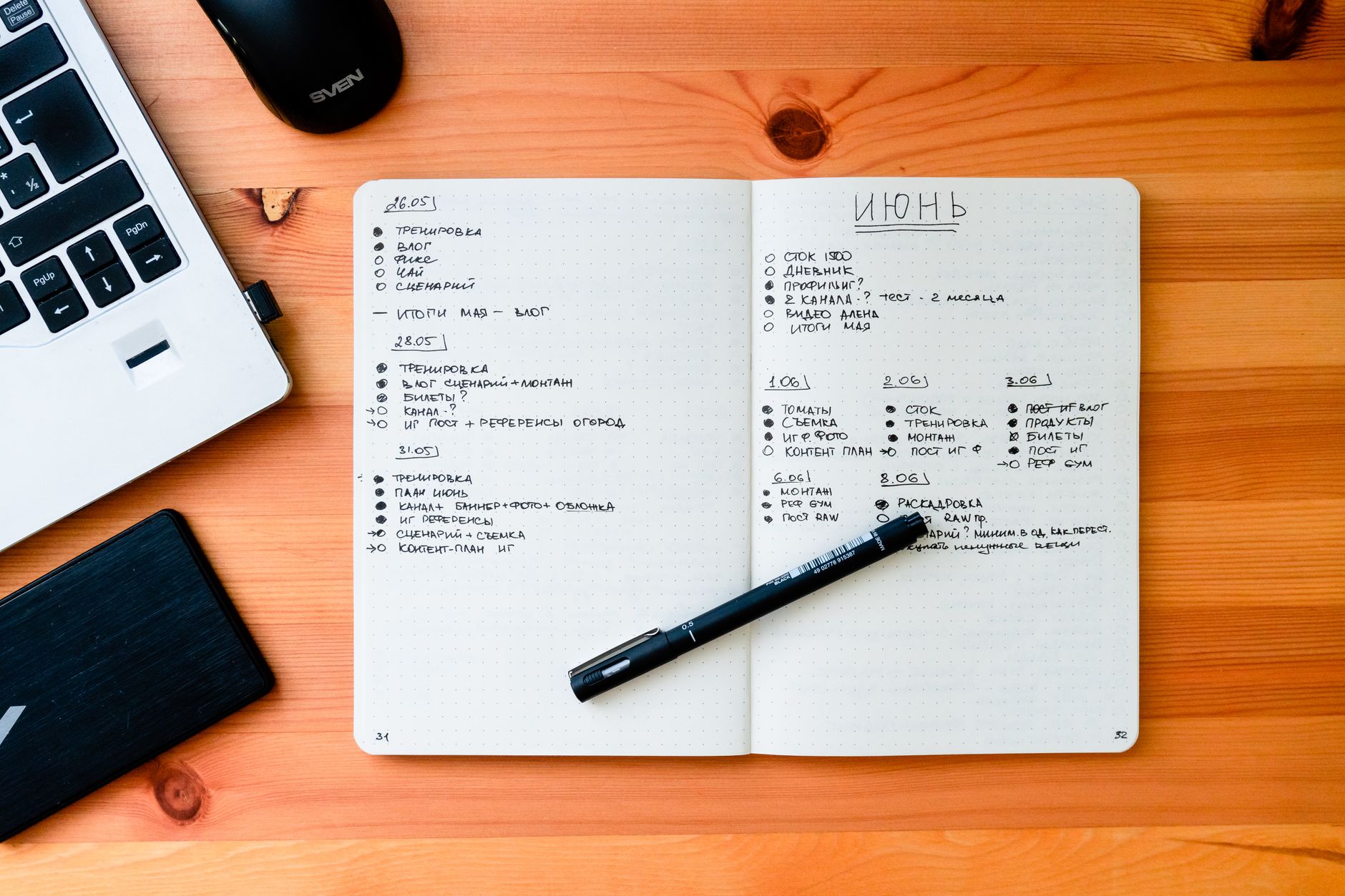
- Pen and paper: Use a physical planner or notebook with columns for each day. Assign colors to contexts (e.g., green marker for creative, blue for administrative) and draw time blocks. Ideal if you prefer something tangible.
- Google Calendar or Outlook: Create separate calendars for each context (e.g., one called 'Creative,' another 'Administrative') and assign them different colors. Block time slots in the corresponding calendar. Advantage: syncs with other devices and sends automatic reminders.
- Notion or Trello: Create a board with columns for each day of the week and cards for each time block. Use colored labels for contexts. Advantage: you can attach specific tasks to each block and move them easily.
- Productivity apps: Tools like Foco let you organize tasks by jobs (each with its own color) and view them in a calendar or list. For example, you can create a 'job' for each client or project, assign it a color (green for creative, blue for administrative), and block time slots in the app’s calendar. When you enter a job’s Focus mode, you only see tasks from that context, which helps maintain concentration. Plus, its voice capture feature speeds up adding tasks on the go without breaking your workflow.
Conclusion: Context-Based Time-Blocking for Working (and Living) Better
Context-based time-blocking is an evolution of traditional time-blocking, designed for those who manage multiple jobs with different demands. Its biggest advantage is that it respects how your brain works: by grouping tasks by type of effort and context, you reduce mental fatigue and boost productivity without working more hours. Plus, it helps you mentally separate your different roles (e.g., 'now I’m a designer,' 'now I’m a manager'), which reduces stress and improves the quality of your work.
To start, try this method for a week with just two or three contexts (e.g., creative and administrative). Use colors to differentiate them and adjust blocks based on your energy. Over time, you can refine the system to include more contexts or jobs. The important thing is that context-based time-blocking isn’t a straightjacket—it’s a flexible tool to help you flow between responsibilities without losing direction.
Try Foco
Every task from every job in one place. Free to start.