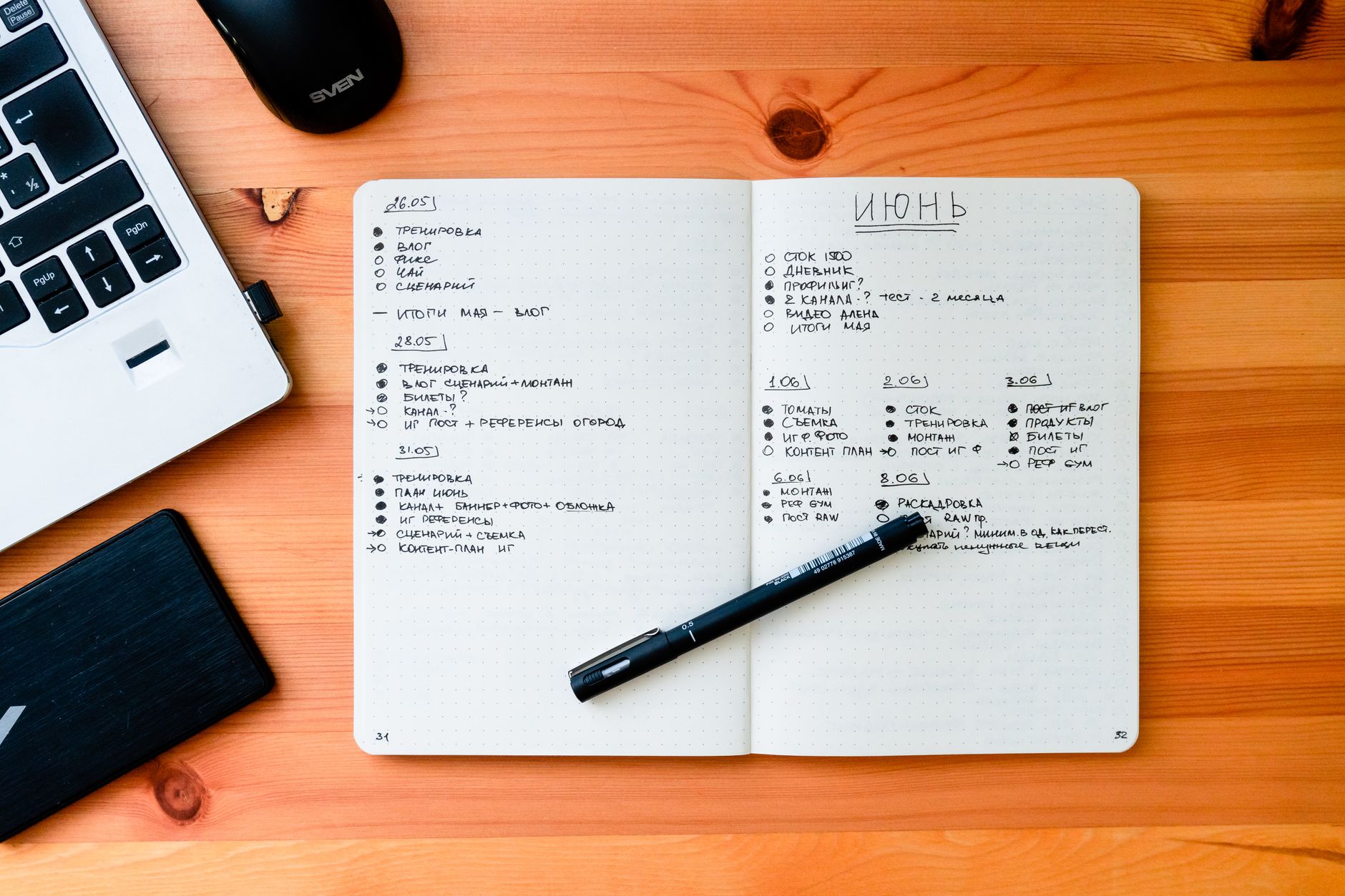
1-3-5 Rule for Productivity: How to Prioritize Tasks When Managing Multiple Jobs or Clients
Learn how to use the 1-3-5 rule for productivity: prioritize 1 big task, 3 medium tasks, and 5 small tasks per day. Perfect for freelancers, solopreneurs, or teams juggling multiple projects.
The 1-3-5 rule for productivity is a simple yet powerful method for organizing your day when you’re managing multiple jobs, clients, or projects. Instead of overwhelming yourself with an endless to-do list, this system forces you to prioritize: 1 big task, 3 medium tasks, and 5 small tasks. It helps you avoid analysis paralysis and make balanced progress, ensuring you don’t neglect what’s important while avoiding getting lost in the urgent. It works especially well for freelancers, solopreneurs, or teams who need to focus on results without overloading their schedules.
What Is the 1-3-5 Rule and Why Does It Work for Managing Multiple Jobs?
The 1-3-5 rule for productivity is built on three key principles: limitation, hierarchy, and realism. By restricting yourself to 9 tasks per day (1 + 3 + 5), you reduce cognitive overload and force yourself to choose wisely. The hierarchy—a big task, three medium tasks, and five small tasks—reflects how we naturally distribute our energy: the most demanding work requires deep focus, while small tasks act as productive 'filler' between blocks. The realism lies in the fact that 9 tasks are achievable, even on chaotic days, without the frustration of unfinished lists.
This method is ideal for those working with multiple clients or projects because: (1) it prevents one job from monopolizing your day, (2) it helps you visualize progress across different areas, and (3) it allows you to adjust priorities on the fly without losing focus. For example, a freelance designer can use the 1-3-5 rule to balance designing a logo (big task), three client revisions (medium tasks), and five administrative tasks (small tasks).
How to Apply the 1-3-5 Rule Step by Step (With Concrete Examples)
- Define your 'jobs' or areas: Group your tasks by client, project, or type of work (e.g., Client A, Client B, Marketing, Administration). This will help you distribute the 9 tasks evenly.
- Select the big task (1): Choose the most important task of the day, the one that requires the most time or concentration. It should align with a key goal for one of your jobs. Example: 'Write the quarterly report for Client X.'
- Choose 3 medium tasks: These are actions that take between 30 minutes and 2 hours and are often intermediate steps toward larger goals. Example: 'Review feedback from Client Y,' 'Schedule social media posts,' and 'Update lead database.'
- Complete with 5 small tasks: Quick actions (under 30 minutes) that clear mental clutter or handle details. Example: 'Reply to 3 pending emails,' 'Send invoice to Client Z,' 'Back up files,' 'Call the supplier,' and 'Organize desk.'
- Assign colors or categories: Use a visual system to identify which job each task belongs to. For example, red for Client A, blue for Client B, and green for internal tasks. This lets you see at a glance if you’re balancing your efforts.
- Review and adjust: At the end of the day, evaluate which tasks you completed and which are pending. If a big task keeps getting postponed, break it into medium or small tasks. If you always finish the small tasks but not the big ones, reduce the number of small tasks.
Common Mistakes When Using the 1-3-5 Rule (and How to Avoid Them)
- Choosing unrealistic big tasks: Don’t confuse 'important' with 'huge.' A big task should be challenging but doable in a day. If it’s too ambitious, break it into subtasks and pick one as the big task.
- Ignoring task dependencies: If a medium task depends on someone else finishing something, don’t include it in your 1-3-5 list until it’s ready. Keep a separate space for pending tasks.
- Not assigning time: The 1-3-5 rule isn’t just a list—it’s a time structure. Block 2-3 hours for the big task, 1 hour for each medium task, and 15-30 minutes for small tasks in your calendar.
- Mixing urgency with importance: The big task should be important, not necessarily urgent. Urgent tasks often sneak into the small tasks, but don’t let them dominate your day.
- Forgetting context: If you work with multiple clients, make sure your 9 tasks cover at least 2-3 different areas. If they’re all from one project, you’re neglecting the rest.
Practical Example: A Day in the Life of a Consultant Using the 1-3-5 Rule
Imagine Laura, a marketing consultant who works with three clients and manages her own business. Here’s how she applies the 1-3-5 rule for productivity in a typical day:
- Big task (1): 'Design content strategy for Client A' (3 hours, requires deep focus).
- Medium tasks (3): 'Follow-up meeting with Client B' (1 hour), 'Analyze last month’s metrics for Client C' (1.5 hours), and 'Write proposal for new client' (1 hour).
- Small tasks (5): 'Send signed contract to Client B,' 'Update expense sheet,' 'Reply to 2 urgent emails,' 'Post on LinkedIn,' and '15-minute call with supplier.'
Laura uses colors to identify each client (blue for A, green for B, red for C) and internal tasks (yellow). At the end of the day, she reviews her list: she completed the big task, two medium tasks, and four small tasks. The meeting with Client B was postponed, so she replaces it the next day with another medium task. This system allows her to make progress across all her projects without feeling overwhelmed.
Tools to Implement the 1-3-5 Rule (and How Foco Can Help)
To apply the 1-3-5 rule for productivity, you can use anything from pen and paper to specialized apps. The key is that the tool allows you to: (1) group tasks by project or client, (2) visualize priorities, and (3) adjust on the fly. Some options:
- Paper or whiteboard: Great for those who prefer something tangible. Use colored sticky notes for each job and place them in columns (1 big, 3 medium, 5 small).
- Spreadsheets: Create a table with columns for each category and rows for each project. Use colors to differentiate jobs.
- Task apps: Look for one that lets you tag tasks by project and priority. Some even have templates for the 1-3-5 rule.
Foco is a useful option for those managing multiple jobs or clients, as it’s designed to organize tasks by area. Each job (client, project, or personal area) has a name and a color, and tasks are displayed with their job’s color. This makes it easy to apply the 1-3-5 rule: you can create a daily list with 1 big task, 3 medium tasks, and 5 small tasks, each with its corresponding color. In Panorama mode, you see all tasks from all jobs at once, which helps you balance priorities. If you need to focus on a single client, Foco mode filters tasks to show only those for that job. Additionally, the List, Kanban, and Calendar views let you adapt the visualization to your workflow. For example, in Kanban view, you can have columns for 'Big,' 'Medium,' and 'Small,' and drag tasks between them as you prioritize.
Try Foco
Every task from every job in one place. Free to start.