How to Apply the Flowtime Technique for Productivity Across Multiple Jobs Without Burnout
Master the Flowtime technique to stay focused on multiple projects without burning out. Practical guide with concrete steps and examples.
Juggling multiple jobs—whether as a freelancer, entrepreneur, or professional with diverse responsibilities—requires more than just organization. It demands a method that safeguards your focus without leading to exhaustion. This is where the Flowtime technique emerges as a flexible alternative to the rigid Pomodoro method, adapting to complex workflows and shifting priorities. Unlike dividing time into fixed blocks, Flowtime allows you to immerse yourself in a task until natural fatigue or distraction sets in, logging these intervals to optimize your energy. In this guide, we’ll explore how to apply this technique specifically when managing multiple jobs, with concrete examples and actionable steps to prevent burnout.

What Is the Flowtime Technique and Why It Works for Multiple Jobs
The Flowtime technique, popularized by developer Zsolt Viczián, is based on a simple principle: work on a task until you feel your concentration waning, without forcing artificial intervals. Unlike Pomodoro (25 minutes of work + 5-minute breaks), Flowtime doesn’t impose predefined limits. Instead, you log the actual time spent on each task and the breaks you take, creating a personalized pattern of your productivity. This is crucial when managing multiple jobs, as each project may require different levels of focus: drafting a report for a client demands less mental energy than debugging code or designing a marketing strategy.
The method rests on two pillars:
- Flexibility: Adapt work blocks to the nature of each task, not the other way around. If you’re in a state of flow (that moment of peak concentration where time seems to vanish), don’t interrupt it for an arbitrary timer.
- Self-awareness: By logging your real work and break intervals, you identify when you perform best for each type of task. For example, you might discover that your productivity for creative tasks (like writing) is optimal in the morning, while analytical tasks (like reviewing metrics) flow better in the afternoon.
- Natural breaks: Breaks aren’t fixed but intentional. Flowtime forces you to stop when you notice fatigue, preventing the cumulative exhaustion that often arises from jumping between projects without pauses.
Productivity across multiple jobs isn’t measured by hours worked, but by the quality of attention you devote to each one at the right time.
How to Implement Flowtime When Managing Multiple Jobs
1. Prepare Your Environment for Flow
Before starting, eliminate distractions specific to each job. If you work from home, use distinct physical or digital spaces for each project. For example:

- Assign a color or label to each job (e.g., blue for Client A, green for a personal project). This helps you switch contexts visually without losing track.
- Close tabs, notifications, or apps unrelated to the current task. If using tools like Slack or email, mute channels that don’t pertain to the job you’re focusing on.
- Prepare necessary materials before starting: documents, links, notes, or even a water bottle. Every interruption to fetch something breaks your flow.
2. Log Your Work and Break Intervals
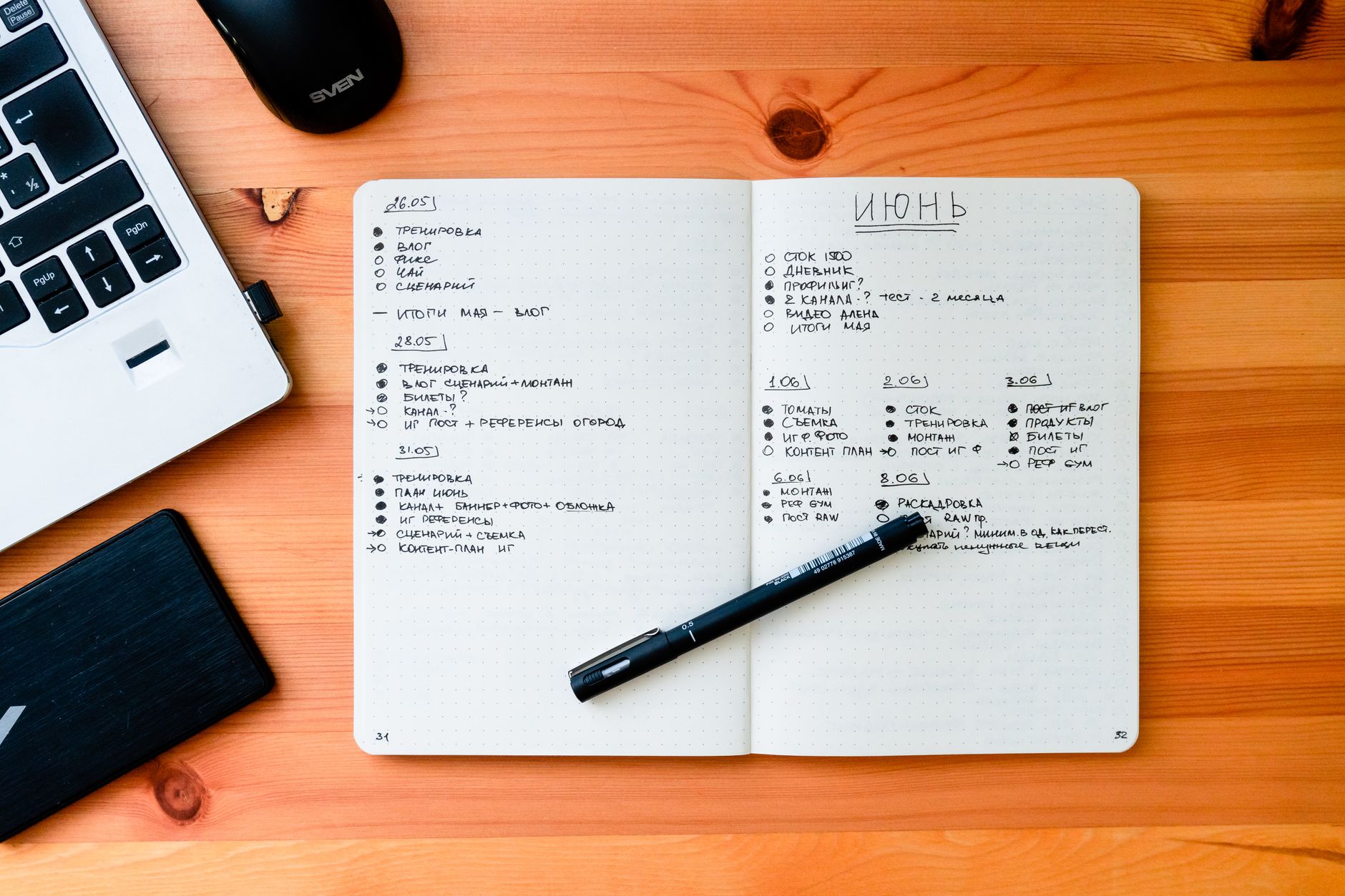
The core of Flowtime is manual logging of your sessions. You’ll need a simple tool to record:
- Start time: Note when you begin a task (e.g., 9:15 AM).
- Task and job: Specify what you’re doing and which project it belongs to (e.g., "Draft proposal for Client B").
- End time: When you feel your concentration dip (or need a break), log the time (e.g., 10:30 AM).
- Actual duration: Calculate the net time worked (in this case, 1 hour and 15 minutes).
- Reason for pause: Note if you stopped due to fatigue, distraction, needing information, or completing the task.
A practical example of logging:
- 9:15 AM - 10:30 AM: Draft proposal (Client B) → 1h 15m (pause: mental fatigue).
- 10:45 AM - 11:20 AM: Check emails (Personal project) → 35m (pause: unexpected call).
- 11:30 AM - 12:45 PM: Design wireframes (Client A) → 1h 15m (pause: completed).
3. Analyze Your Patterns and Adjust
After a week of logging your intervals, review the data to identify:
- Optimal times per task type: Do you perform better in 45-minute blocks for creative tasks and 90-minute blocks for analytical ones?
- Peak energy hours: Is your concentration better in the morning for one job and in the afternoon for another?
- Fatigue signals: Do you usually stop after 1 hour on repetitive tasks? Or can you sustain 2 hours on projects you’re passionate about?
Use this information to plan your day. For example, if you find your energy for administrative tasks (like invoicing) is low after lunch, schedule those activities for early morning. If a client requires frequent meetings, group those calls into a specific block to avoid fragmenting your day.
Flowtime in Action: Example with Three Simultaneous Jobs
Imagine you’re a freelance designer with three active projects: a corporate client (branding design), a personal project (developing an online course), and administrative tasks (invoices, emails). Here’s how you’d apply Flowtime in a typical day:

Morning: Deep Focus
- 8:30 AM - 10:00 AM: Design logo (Corporate client) → 1h 30m (pause: thirst, stretching).
- 10:15 AM - 11:15 AM: Record course lesson (Personal project) → 1h (pause: completed).
- 11:30 AM - 12:00 PM: Check emails (Administrative) → 30m (pause: client call).
Afternoon: Light Tasks and Meetings
- 1:00 PM - 2:00 PM: Client meeting (Corporate client) → 1h (pause: post-meeting break).
- 2:30 PM - 3:30 PM: Edit course video (Personal project) → 1h (pause: eye strain).
- 4:00 PM - 4:45 PM: Invoicing (Administrative) → 45m (pause: completed).
Notice how the longer blocks (1h 30m) are reserved for tasks requiring creative flow, while administrative or meeting tasks are grouped into shorter intervals. This prevents burnout from constantly switching between different contexts.
Common Mistakes When Using Flowtime with Multiple Jobs (and How to Avoid Them)
1. Not Defining Clear Priorities
Flowtime isn’t an excuse to work aimlessly. Before starting your day, identify the 2-3 most important tasks for each job and assign them time blocks during your peak energy hours. Use a simple matrix like Eisenhower’s to distinguish between urgent and important tasks. For example:

- Urgent and important: Deliver a design to a client today (morning block).
- Important, not urgent: Plan course content (afternoon block).
- Urgent, not important: Reply to emails (short block after a heavy task).
2. Ignoring Fatigue Signals
The biggest risk of Flowtime is overestimating your stamina. If you notice your mind wandering, making repeated mistakes, or feeling irritable, it’s a sign you need a break, even if you’ve only been working for 20 minutes. In these cases, apply the 20-20-20 rule: every 20 minutes, look at something 20 feet (6 meters) away for 20 seconds. This reduces mental and visual fatigue, especially useful if you spend hours in front of screens.
3. Not Protecting Your Breaks
A break in Flowtime isn’t about checking social media or replying to messages. For it to be effective, it must physically disconnect you from the task. Try these options:
- Stand up and walk for 5 minutes (ideal for sedentary tasks).
- Do stretches or deep breathing (reduces accumulated stress).
- Have coffee or tea without screens (the ritual helps reset your mind).
- Look out the window or step outside (especially if working from home).
Tools to Apply Flowtime Across Multiple Jobs
While Flowtime relies on manual logging, some tools can simplify the process without sacrificing flexibility:
- Timers with logging: Apps like Toggl Track or Clockify let you start and stop time for each task, generating automatic reports of your intervals. You can tag each entry with the job name (e.g., "Client X - Design").
- Tracking templates: Use a spreadsheet (Google Sheets or Excel) with columns for start time, task, job, duration, and reason for pause. Example:
- | Start Time | Task | Job | Duration | Reason for Pause |
- |------------|--------------------|-------------|----------|--------------------|
- | 9:15 AM | Draft proposal | Client B | 1h 15m | Mental fatigue |
- | 10:45 AM | Check emails | Project Y | 35m | Unexpected call |
Soft alarms: Set reminders every 90 minutes to assess if you need a break, without forcing you to stop. Apps like Stretchly (for Windows/macOS) or Stand Up! (for iOS) notify you with non-intrusive alerts.
Try Foco
Every task from every job in one place. Free to start.