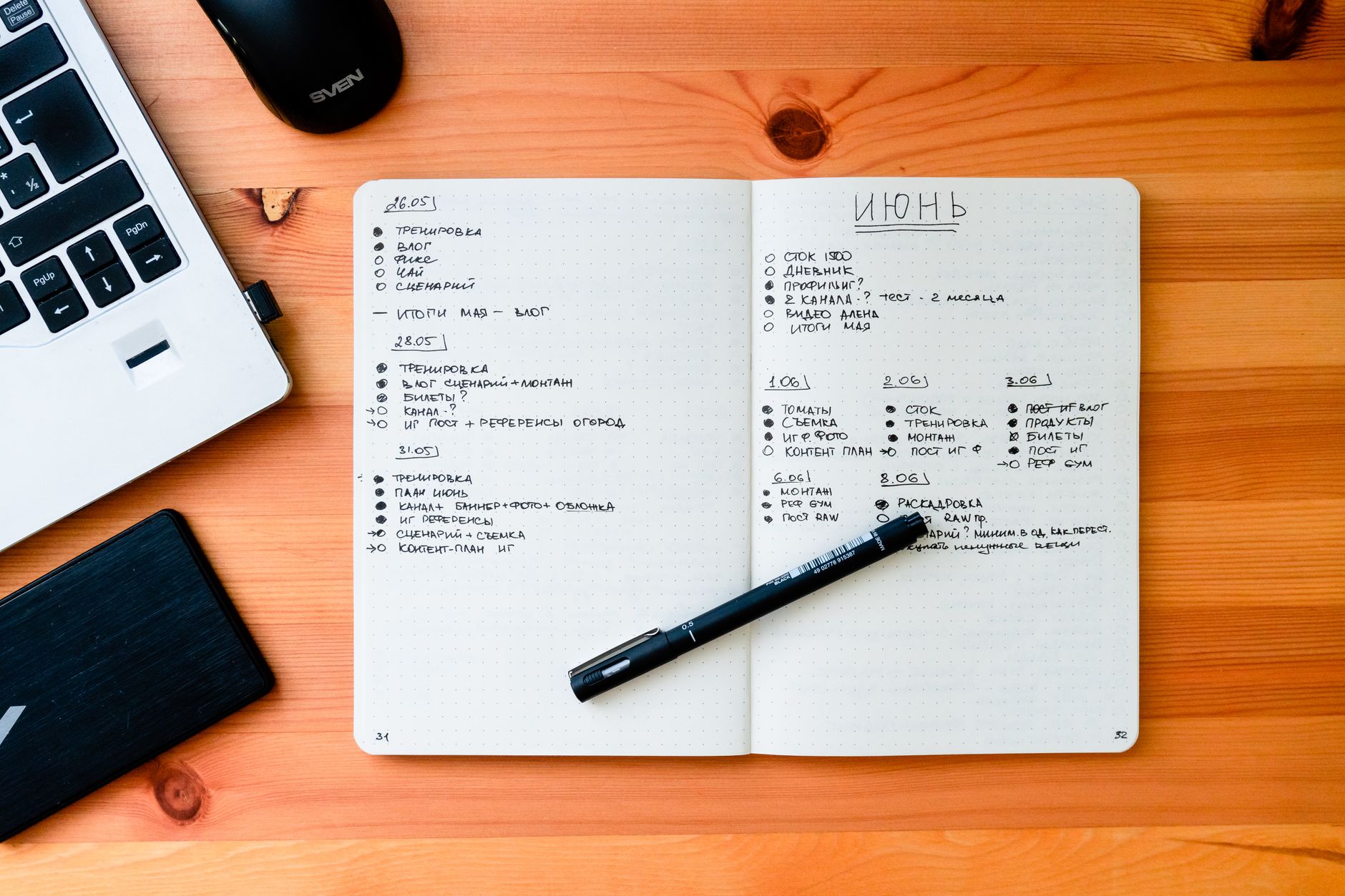
How to do **deep work with multiple jobs**: keys to staying focused across projects without losing momentum
Learn how to apply Cal Newport's Deep Work method to manage multiple jobs or projects in focused time blocks, with concrete steps and examples.
Juggling multiple jobs, projects, or clients is a common challenge for freelancers, entrepreneurs, and multitasking professionals. The temptation to switch between tasks, respond to notifications, or prioritize the urgent over the important can sabotage your productivity. This is where Cal Newport’s Deep Work method—working in distraction-free, high-concentration blocks—becomes a game-changer. But how do you apply deep work with multiple jobs without letting chaos take over? This guide explains how to adapt the method to environments with competing responsibilities, with actionable steps and real-world examples.

What is Deep Work and why it works for multiple jobs
Deep Work is the ability to focus on a cognitively demanding task without distractions for an extended period. Newport argues that this skill is increasingly rare—and valuable—in a world full of digital interruptions. For those managing multiple jobs or projects, deep work isn’t a luxury; it’s a necessity. It allows you to make progress on what’s strategic without getting lost in the operational.
The key lies in prioritizing quality over quantity. Instead of splitting your attention across five shallow tasks, deep work forces you to dedicate time blocks to one thing, with a level of depth that yields tangible results. This is especially useful when working on projects with different deadlines, clients with varying demands, or areas requiring opposing approaches (e.g., creativity vs. analysis).
The 4 principles of Deep Work applied to multiple jobs
- Work deeply: Dedicate 60- to 90-minute blocks to a single task or project, without interruptions. Example: If you’re a designer and developer, separate your morning for designing (deep work) and your afternoon for coding (another deep work block).
- Embrace boredom: Train your mind to resist the urge to check email or social media every 10 minutes. Use techniques like the 20-minute rule (if a distraction arises, note it down and return to it later).
- Quit the shallow work: Identify which tasks in each job are trivial (replying to emails, unnecessary meetings) and which require deep work (writing a report, planning a strategy). Automate or delegate the former.
- Ritualize your focus: Establish routines that mark the start and end of your deep work blocks. For example: have a coffee, close browser tabs, and enable
- Do Not Disturb
- mode. For multiple jobs, use visual cues (like a distinct color or physical space for each project).
How to organize your week for deep work with multiple jobs
1. Group tasks by job type and depth
The first step is to classify your tasks along two axes: the job they belong to (Client A, Project B, personal tasks) and the level of concentration they require (shallow vs. deep). For example:

- Job 1 (Client A): Review design feedback (shallow), create wireframes for a new website (deep work).
- Job 2 (Project B): Reply to collaborator emails (shallow), write a business proposal (deep work).
- Job 3 (Personal): Pay bills (shallow), plan quarterly goals (deep work).
Once classified, assign deep work blocks to the most important tasks in each job, prioritizing based on deadlines and impact. Shallow tasks can be grouped into short blocks (20-30 minutes) at the end of the day.
2. Use time-blocking to protect your focus blocks
Time-blocking is a technique that complements deep work by assigning specific time slots to each task in your calendar. For multiple jobs, this prevents one project from encroaching on another’s time. Example of a productive morning:
- 8:00 - 9:30 AM: Deep work (Project B - write proposal).
- 9:30 - 10:00 AM: Break (walk, stretch).
- 10:00 - 11:30 AM: Deep work (Client A - create wireframes).
- 11:30 AM - 12:00 PM: Shallow tasks (reply to emails for both jobs).
The key is to protect these blocks as if they were unmovable meetings. If an emergency arises, assess whether it truly requires breaking your deep work or can wait until the next shallow block.
3. Set clear boundaries between jobs
When managing multiple jobs, it’s easy for tasks from one to bleed into another, causing stress and loss of focus. To avoid this:
- Use distinct physical or digital spaces: If working from home, assign a place (or browser tab) for each project. Example: desk for Client A, kitchen table for Project B.
- Define job-specific schedules: If possible, dedicate specific days or time slots to each job. Example: Mondays and Wednesdays for Client A, Tuesdays and Thursdays for Project B.
- Close loops: At the end of a deep work block, jot down a quick note on the task’s status and what’s left. This prevents your mind from continuing to process that job during the next block.
Tools and techniques to maintain deep work amid distractions
Distractions are the number one enemy of deep work, especially when juggling multiple jobs. These strategies will help you minimize them:

1. Eliminate digital distractions
- **Airplane mode or
- Do Not Disturb
- : Enable it during deep work blocks. If you use your phone for work, try apps like Forest or Freedom** to block social media.
- Organize tabs: Use extensions like OneTab to group tabs by job and close those you don’t need at the moment.
- Email management: Turn off notifications and check email only in specific blocks (e.g., twice a day, 20 minutes each time).
2. Manage external interruptions
If you work in a team or with clients, interruptions are inevitable. To handle them:
- Communicate your deep work hours: Let your team or clients know that, for example, you won’t be available from 9 to 11 AM but will respond at 11:30 AM.
- Use visual signals: A sign on your door, a status in Slack, or an automatic email reply can indicate you’re in deep work mode.
- Block time for emergencies: Reserve 30 minutes a day for unexpected issues. If none arise, use the time for shallow tasks.
3. Train your mind to refocus
Even with the best strategies, your mind may wander. Techniques to regain focus:
- The 2-minute rule: If a distraction (e.g., remembering you need to call a client) arises during deep work, jot it down and keep working. Spend 2 minutes at the end of the block reviewing it.
- 4-7-8 breathing: If you feel anxious about switching tasks, inhale for 4 seconds, hold for 7, and exhale for 8. Repeat 3 times to calm your mind.
- Quick review: Before starting a deep work block, mentally recap what you’ll do and why it’s important. This reduces procrastination.
Practical example: a day of deep work with three jobs
To illustrate how to apply all of the above, here’s a realistic example of a day managing three different jobs (freelance, personal project, and household tasks), with deep work and shallow blocks:

- 6:30 - 7:30 AM: Deep work (Personal project - write book chapter).
- 7:30 - 8:00 AM: Breakfast and email review (shallow tasks).
- 8:00 - 9:30 AM: Deep work (Freelance - design logo for client).
- 9:30 - 10:00 AM: Break (walk, no screens).
- 10:00 - 11:30 AM: Deep work (Household tasks - plan monthly budget).
- 11:30 AM - 12:00 PM: Shallow tasks (reply to messages, brief calls).
- 12:00 - 1:00 PM: Lunch and disconnect.
- 1:00 - 2:30 PM: Deep work (Freelance - review project code).
- 2:30 - 3:00 PM: Client meeting (shallow task).
- 3:00 - 4:00 PM: Deep work (Personal project - research sources for book).
- 4:00 - 4:30 PM: Wrap-up (review task list, plan tomorrow).
Deep work isn’t about working more hours; it’s about working with more intention: making progress on what matters without letting the urgent demands of multiple jobs distract you.
How to measure and improve your deep work capacity
To gauge whether you’re applying deep work effectively with multiple jobs, track these indicators:
- Daily deep work time: Note how many 60- to 90-minute blocks you dedicate to deep tasks. Ideal: 3-4 blocks per day.
- Tasks completed vs. started: If you finish more tasks than you start, you’re on the right track. If not, reassess your priorities.
- Distraction count: Log how many times you get interrupted during a deep work block. If it’s more than 3, adjust your strategies.
- Progress satisfaction: At the end of the day, evaluate whether you made progress on what mattered in each job. If not, rethink your planning.
To improve, try these tweaks:
- Gradually increase deep work: If you start with 1 block a day, work up to 2 or 3.
- Experiment with schedules: Try deep work first thing in the morning (when your mind is fresh) or in the afternoon (if you’re more productive then).
- Eliminate one distraction at a time: If social media is your biggest distraction, block one app for a week. Then add another.
Deep work with multiple jobs: tools to put it into practice
While deep work is a mental skill, some tools can help you stay organized and reduce friction. For example, Foco is an app designed to manage multiple jobs in one place, making it easier to apply deep work without losing sight of your responsibilities. With Foco, you can:
- Visually separate your jobs: Each project or client has a dedicated color and space, helping you switch contexts without mixing tasks.
- Filter by job: In Focus mode, you only see tasks for one project, avoiding distractions from other jobs. Ideal for deep work blocks.
- Plan with time-blocking: The Calendar view lets you assign time blocks to each task, protecting your focus slots.
- Capture ideas quickly: If a distraction arises during deep work, use voice capture to note it down and stay focused. The app transcribes the audio and automatically detects dates or priorities.
The most useful aspect of Foco for deep work is that it simplifies managing multiple jobs, freeing your mind to concentrate on what’s important. If you try the method, you can use it to organize your deep work blocks and ensure each project progresses without one encroaching on another’s time.
Ultimately, deep work with multiple jobs isn’t about doing more; it’s about doing better. With planning, clear boundaries, and the right tools, you can transform your productivity and make progress on what truly matters, without getting lost in the chaos.
Try Foco
Every task from every job in one place. Free to start.