How to Use the **Zeigarnik Method for Productivity Across Multiple Jobs** (and Turn Unfinished Work into Your Advantage)
Learn how to apply the Zeigarnik method for productivity across multiple jobs: turn the tension of unfinished tasks into focus and make progress without burnout.
Picture this: you’re juggling three projects at once—a client report, a team presentation, and your personal to-do list. Suddenly, your mind is flooded with "I should be doing X," "I haven’t finished Y," and "What if I forget Z?" That nagging feeling of unfinished tasks isn’t random—it’s the Zeigarnik effect, a psychological phenomenon that explains why our brains cling to what we leave undone. The fascinating part? Instead of seeing this as a distraction, you can harness it as a productivity engine, especially when managing multiple jobs or projects simultaneously.

The Zeigarnik method for productivity across multiple jobs isn’t about rushing to finish everything at once. It’s about leveraging the natural tension of unfinished work to maintain focus, prioritize effectively, and reduce the anxiety of what’s left undone. In this guide, we’ll break down how this principle works, why it’s particularly useful in multitasking environments, and—most importantly—actionable steps to apply it without falling into mental overload. You’ll see real-world examples from professionals who use it (from freelancers to managers) and how to integrate it with techniques like time-blocking or the Eisenhower Matrix.
What Is the Zeigarnik Effect (and Why Does Your Brain Obsess Over Unfinished Tasks?)
The Zeigarnik effect is named after psychologist Bluma Zeigarnik, who noticed something intriguing in the 1920s: waiters in a café could recall unserved orders with remarkable accuracy but forgot them instantly once the food was delivered. Zeigarnik replicated this observation in controlled experiments and found that interrupted or incomplete tasks were remembered 90% better than completed ones. The reason lies in how our working memory functions: the brain maintains a cognitive tension toward unfinished tasks, as if leaving a "loose thread" that compels us to tie it up.
In productivity terms, this has two sides:
- Advantage: The tension of unfinished work acts as an intrinsic reminder. If you leave a task halfway (e.g., a draft email unsent), your mind will bring it to the forefront more often than a finished task, helping you return to it sooner.
- Risk: If you accumulate too many open tasks, that same tension becomes mental noise. Research by Roy Baumeister (on cognitive load) shows that each unfinished task consumes mental resources, reducing our ability to focus on what we’re actively doing.
The trick isn’t to eliminate the tension of unfinished work, but to manage it: have enough "loose threads" to maintain momentum, but not so many that they overwhelm your capacity to execute.
Why the Zeigarnik Method Is Essential for Managing Multiple Jobs
When you’re handling multiple projects—whether you’re a freelancer with three clients, a manager with two teams, or someone balancing remote work with studies—the Zeigarnik effect becomes amplified. Each project has its own unfinished tasks, deadlines, and dependencies, multiplying the "loose threads" in your mind. This is where the Zeigarnik method for productivity across multiple jobs shines:
1. Reduces Context Switching (and Mental Fatigue)
Constantly switching between projects (what psychologists call switching costs) is one of the biggest time-wasters. According to a University of California study, recovering focus after an interruption can take up to 23 minutes. The Zeigarnik effect helps minimize these jumps because, by leaving tasks strategically unfinished, your brain retains them as priorities. For example, if you’re writing a report for Client A and leave a section incomplete, it’ll be easier to return to it after checking an email from Client B, because your mind already has an "anchor" in that project.
2. Prioritizes Without Analysis Paralysis
In multitasking environments, deciding what to do first can be overwhelming. The Zeigarnik method simplifies this: unfinished tasks signal themselves as needing attention. Imagine you have three projects with looming deadlines. If you leave a design review for Project X halfway, that task will naturally surface in your mind when you have a gap, instead of wasting time choosing between 20 options. It’s like having an organic prioritization system.
3. Fights Procrastination with "Micro-Closures"
Procrastination often strikes when a task feels too big or vague. The Zeigarnik effect lets you break work into manageable chunks and leave each at a specific point. For example, instead of postponing "write the full report," you can finish 80% of it and stop at the introduction. The tension of the unfinished work will make returning to it easier than starting from scratch. This technique, known as a "strategic stopping point," is used by writers like Ernest Hemingway (who left his drafts unfinished to resume the next day) and developers who leave functions half-coded to continue later.
How to Apply the Zeigarnik Method for Productivity Across Multiple Jobs: Concrete Steps
Applying this method doesn’t mean leaving everything half-done—it’s about intentionally managing which tasks stay open and how. Follow these steps to integrate it into your routine:

Step 1: Identify Your "Anchor Tasks" per Project
Not all unfinished tasks are equal. Some act as entry points to a project, while others are details that can wait. For each job or project, pick 1-2 anchor tasks that, when left unfinished, help you resume easily. Examples:
- For a designer: Leave a logo sketch with base colors applied (but without final tweaks).
- For a developer: Write the skeleton of a function without implementing the internal logic.
- For a student: Highlight key ideas in a chapter without writing the summary.
The key is that these anchor tasks should be advanced enough to create tension but not so complex that they require significant effort to resume. If you work with batch processing for multiple jobs, you can group these anchor tasks by type (e.g., all design reviews in one session).
Step 2: Use the "80% Rule" to Progress Without Burning Out
The Zeigarnik effect works best when you leave tasks at an optimal point: not too early (to avoid losing momentum) and not too late (to avoid exhaustion). A practical rule is the 80% method:
- Progress a task until it’s 80% complete (e.g., a draft without proofreading, code without tests, or an outline without details).
- Leave a visual reminder of what’s missing (e.g., a note saying "check sources" in the document or a comment in the code).
- Move on to another task or project, trusting that the tension of the unfinished work will bring you back.
This approach avoids perfectionism (which leads to procrastination) and shallow work (which doesn’t create enough tension). For example, a writer might leave an article with 80% of the content written but without the introduction or conclusions, knowing that resuming will be easier than starting from scratch.
Step 3: Create a System for "Active Pending Tasks"
For the Zeigarnik method to avoid chaos, you need an external system to track intentionally unfinished tasks. This could be:
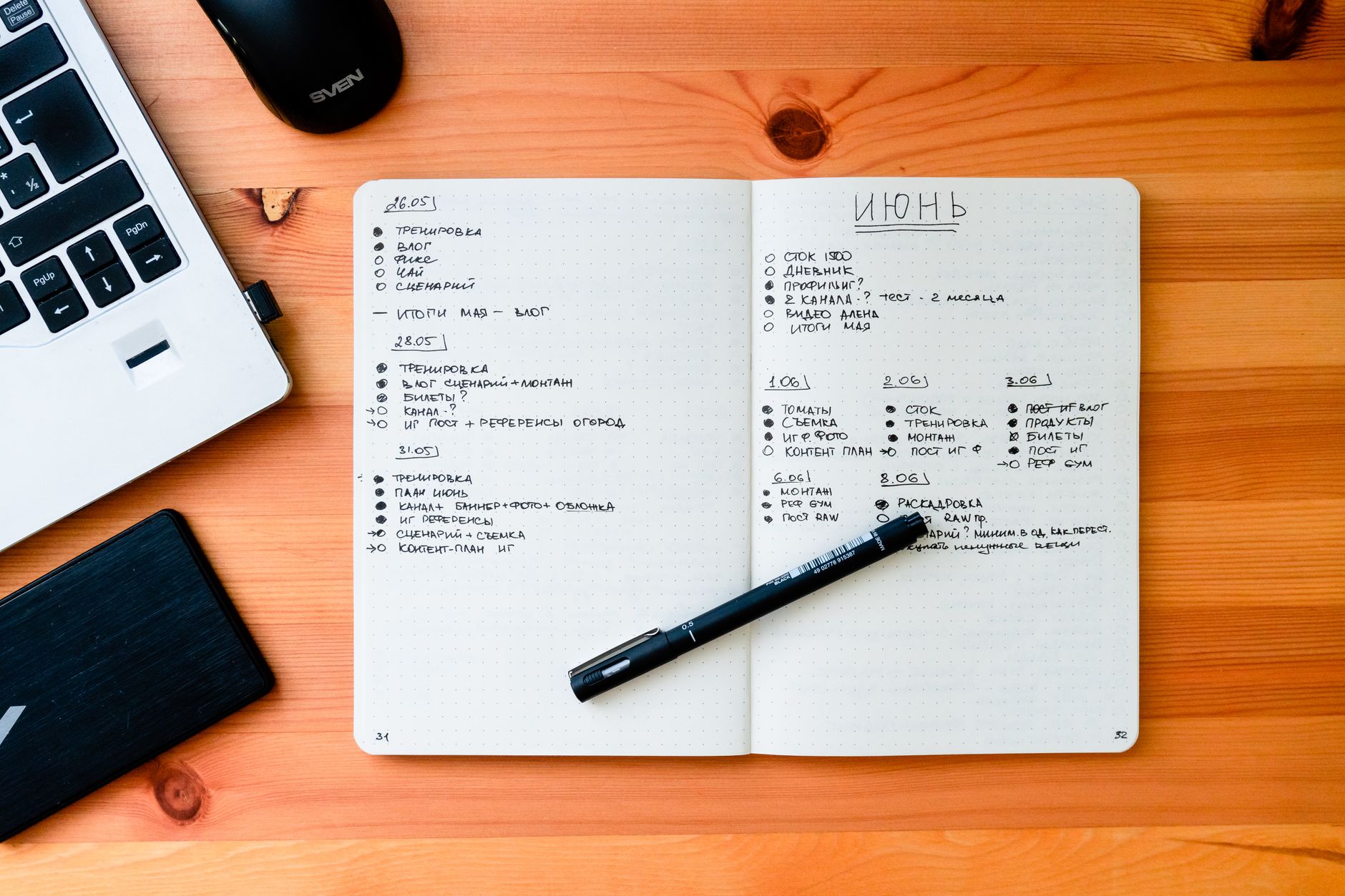
- A physical list: A notebook or whiteboard with anchor tasks for each project, grouped by color or category.
- A task app: Use tags like #pending or #80% to filter these tasks. If you manage clients, grouping tasks by client in a task app helps you see the big picture without mixing contexts.
- A Kanban board: Columns like "In Progress" or "Blocked" for tasks left halfway, with notes on what’s missing.
The idea is that, when reviewing your system, you can quickly identify which tasks are creating useful tension (and which are just noise). For example, if a task has been at 80% for weeks, it might be a sign that you need to break it into smaller steps or delegate it.
Step 4: Combine It with Intentional Closure Techniques
The Zeigarnik method doesn’t work in isolation—it needs closure rituals to avoid overload. Some complementary techniques:
- Time-blocking: Assign specific time blocks to resume unfinished tasks. For example, dedicate the first 30 minutes of your morning to closing 80% tasks.
- Eisenhower Matrix: Use the matrix to decide which unfinished tasks are urgent (need immediate closure) and which are important but not urgent (can wait).
- 5-Second Rule: When you feel the urge to procrastinate on an unfinished task, count 5-4-3-2-1 and act. This interrupts the autopilot of procrastination. For more details, check out how to apply the 5-second rule for procrastination in multiple projects.
Real-World Examples: How Professionals Use the Zeigarnik Method
Case 1: A Freelancer with Three Clients
Maria, a graphic designer, manages projects for an architecture firm, a tech startup, and an e-commerce client. To avoid mixing contexts, she uses the Zeigarnik method like this:

- At the end of her workday, she leaves one anchor task unfinished per client (e.g., a logo sketch without color adjustments, a wireframe without prototyping, or a color palette without application).
- She notes in her task app exactly what’s missing (e.g., "adjust kerning in the title") to reduce friction when resuming.
- The next day, she reviews her list of pending tasks and uses the 80% method to close what she left unfinished before starting anything new.
Result: Maria reduces context-switching time by 30% and makes progress on all projects without feeling like she’s neglecting any.
Case 2: A Manager with Two Teams
Carlos leads a development team and a marketing team. To maintain focus on both, he applies the Zeigarnik effect this way:
- In meetings, he intentionally leaves questions or decisions open (e.g., "Which metric should we use to measure success?") and logs them as pending tasks in his app.
- When finishing a complex task (like a project plan), he leaves one step unfinished (e.g., sending the document without final approval).
- He uses a shared Kanban board with columns like "Under Review" for tasks that require input from others, creating useful tension without blocking progress.
Result: Carlos avoids analysis paralysis and keeps his teams aligned, as unfinished tasks act as natural reminders of what needs attention.
Common Mistakes (and How to Avoid Them)
The Zeigarnik method can backfire if not applied intentionally. Here are the most common mistakes and how to fix them:
Mistake 1: Leaving Too Many Tasks Open
If you accumulate dozens of unfinished tasks, the tension turns into anxiety. Solution: Limit your anchor tasks to 1-2 per project and review weekly what you can close or delegate. Use the rule of 3: At the end of the day, pick only 3 unfinished tasks to resume the next day.
Mistake 2: Not Tracking Pending Tasks
If you rely solely on memory, unfinished tasks become mental noise. Solution: Use an external system (app, notebook, or board) to record what you left unfinished and what’s missing. For example, if you work with tools like Notion or GitHub, syncing tasks in one place helps centralize pending work without losing context.
Mistake 3: Leaving Tasks at Ambiguous Points
If you leave a task without a clear continuation point (e.g., "start the report"), it’ll be hard to resume. Solution: Use the 80% method and leave specific notes (e.g., "review data in section 3").
Tools to Apply the Zeigarnik Method (Without Overcomplicating It)
You don’t need complex tools to use this method, but some features can make it easier:
- Tags or colors: Use labels like #pending or colors to identify unfinished tasks. For example, in a task app, you can mark 80% tasks in red and completed ones in green.
- Visual reminders: Set reminders for anchor tasks (e.g., "review logo sketch") to appear during low-energy moments, like after lunch.
- Attached notes: Add notes with exactly what’s missing in each unfinished task. For example, in a development task, attach a comment like "implement form validation."
- Custom views: Use views like Kanban or Calendar to group pending tasks by project or deadline. If you manage multiple jobs, grouping tasks by client helps you see the big picture without mixing contexts.
For example, an app like Foco lets you create containers for each job (each with its own color) and view all pending tasks in Panorama mode, each with its project’s color. This makes it easy to spot which anchor tasks need attention without losing sight of the whole. Its voice capture feature can also help quickly log what you left unfinished in a task, attaching the audio as a note for later resumption.
Conclusion: Turn Unfinished Work into Your Edge
The Zeigarnik method for productivity across multiple jobs isn’t about working harder—it’s about working smarter. By leaving tasks strategically unfinished, you leverage a natural mechanism in your brain to maintain focus, reduce procrastination, and make progress on multiple projects without feeling overwhelmed. The key lies in:
- Choosing which tasks to leave open (and which to close).
- Using external systems to track pending work and avoid mental clutter.
- Combining it with closure techniques like time-blocking or the Eisenhower Matrix.
As psychologist Kurt Lewin, a pioneer of field theory, once said: "There is nothing so practical as a good theory." The Zeigarnik effect is that theory—a psychological principle that, when applied methodically, can transform how you manage your work. Start today with one anchor task and watch how your productivity—and mental clarity—improve without extra effort.
FAQ
Does the Zeigarnik method work for all types of tasks?
It works best for tasks requiring creativity or problem-solving, like writing, designing, or coding. For repetitive tasks (e.g., answering emails), it’s less effective because they don’t create enough cognitive tension. In those cases, combine it with techniques like batch processing.
How do I prevent unfinished tasks from causing anxiety?
Limit the number of anchor tasks (1-2 per project) and track them in an external system (app or notebook). This turns tension into useful focus instead of mental noise. Also, review weekly what you can close or delegate.
Can I use the Zeigarnik method with the Pomodoro technique?
Yes, but with adjustments. Instead of leaving a task unfinished at the end of a Pomodoro (25 minutes), use the 80% method: progress to a clear point and leave a specific note to resume in the next Pomodoro. This avoids frustration from interrupting at a bad moment.
What if an unfinished task gets "stuck"?
If a task stays at 80% for more than 3 days, break it into smaller steps or identify what’s blocking it (missing info, dependency on others, etc.). Use the five whys technique to find the root cause.
Is the Zeigarnik effect the same as procrastination?
No. Procrastination is postponing without intention, while the Zeigarnik method involves leaving tasks unfinished strategically to make resuming easier. The difference lies in control: in procrastination, you avoid the task; in the Zeigarnik method, you leave it at an optimal point to return to it.
Try Foco
Every task from every job in one place. Free to start.