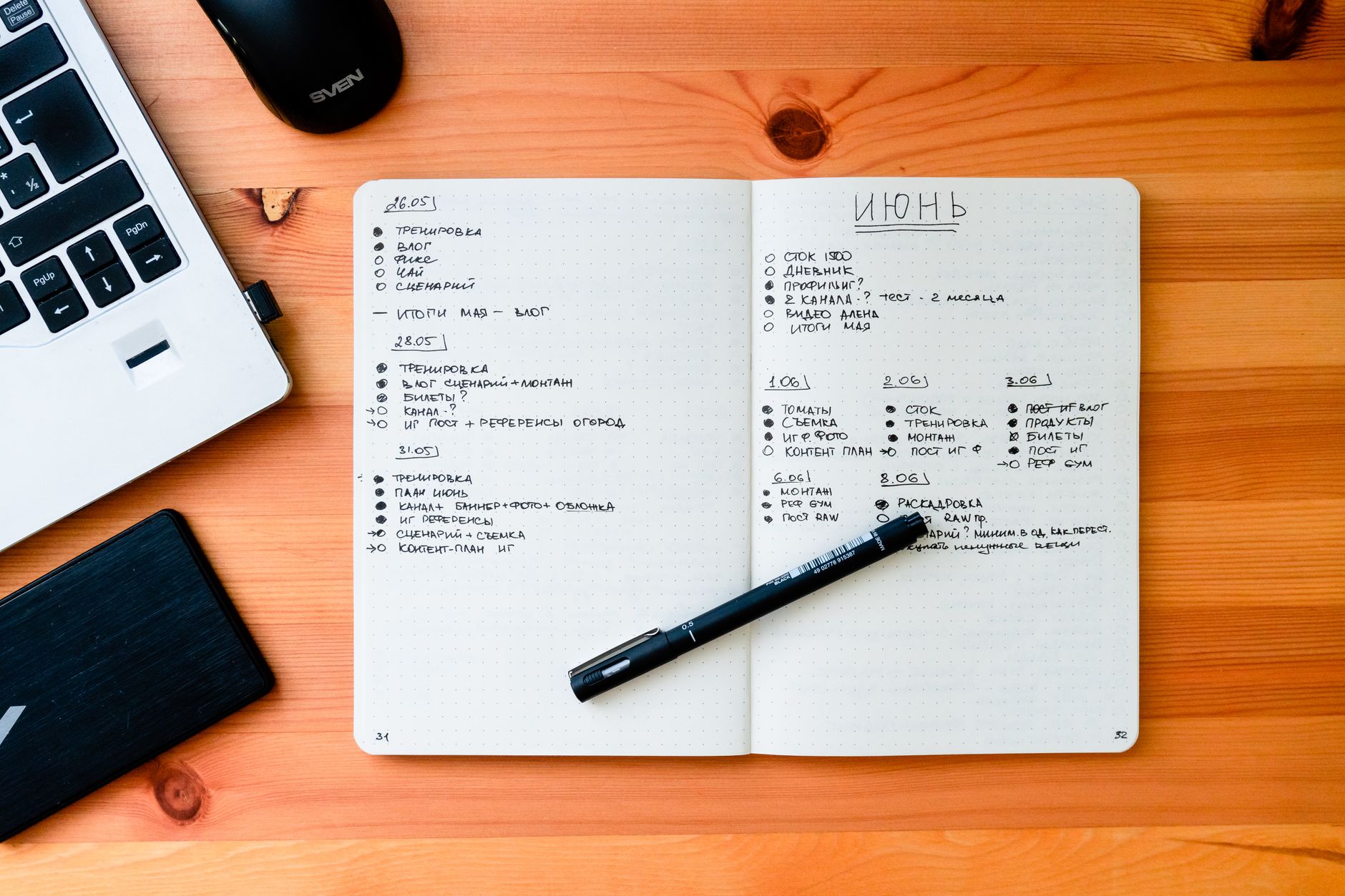
Practical guide to applying the Zen to Done (ZTD) method in multi-project environments
Learn how to apply the Zen to Done (ZTD) method in multi-project environments, prioritizing what’s essential and reducing stress without losing organization.
Managing multiple jobs, projects, or clients at once can quickly turn into a chaotic mix of scattered tasks, overlapping deadlines, and endless notifications. The Zen to Done (ZTD) method, created by Leo Babauta as a simplified version of GTD, is ideal for those seeking productivity without complexity, but applying it in multi-project environments requires adjustments. This guide explains how to adapt the Zen to Done method for multiple jobs, keeping ZTD’s minimalist essence while gaining clarity and control over every area of your professional life.

What is the Zen to Done method, and why does it work for multiple projects?
ZTD is based on 10 key habits that prioritize action over excessive planning. Unlike GTD, which can become overwhelming with its multiple lists and contexts, ZTD focuses on simplifying, deciding quickly, and executing. These are its pillars:
- Collect: Capture everything that requires your attention in one place, without filtering.
- Process: Decide in seconds whether a task is actionable (and what to do with it).
- Plan: Choose the 1-3 most important tasks of the day (MITs).
- Do: Focus on one task at a time, without distractions.
- Simple system: Use minimal tools (e.g., a to-do list and a calendar).
- Organize: Assign a fixed place to each task (project, context, or date).
- Review: Evaluate weekly what’s working and what needs adjustment.
- Simplify: Eliminate the unnecessary (tasks, commitments, or tools).
- Routines: Create daily habits to automate decisions.
- Find your passion: Align your tasks with what truly matters.
In environments with multiple jobs, the challenge isn’t just applying these habits but preventing projects from blending together and information overload from clouding your focus. For example, a freelancer managing clients in design, development, and consulting might feel their task list is a collage of others’ priorities. This is where ZTD shines: it forces you to filter what’s essential and work intentionally, not out of inertia.
How to adapt the Zen to Done method for multiple jobs: step by step
1. Collect: one place for everything (but with visual labels)
The first ZTD habit is to capture everything in an external system. In multi-project environments, this means centralizing tasks from clients, personal projects, and recurring obligations in a single tool. The key is to visually differentiate each area to avoid confusion.
Practical example: Imagine you’re a graphic designer and a teacher. Your tasks might include: "Design logo for Client A (urgent)", "Prepare typography class for Thursday", and "Pay hosting bill". If you mix them in a flat list, you’ll lose context. Instead, use color codes or labels for each job (e.g., blue for design, green for teaching, gray for administrative). This way, when you open your list, you’ll instantly see what belongs to each area.
2. Process: decide quickly with clear rules
ZTD suggests processing your tasks in batches, deciding in under 2 minutes what to do with each. For multiple projects, add these rules:
- 2-minute rule: If a task takes less than 2 minutes (e.g., replying to a short email or uploading a file), do it immediately. Exception: If you’re in the middle of a deep work block for another project, save it for later.
- Context rule: If a task requires specific tools or mindset (e.g., designing vs. teaching), group it with similar tasks to reduce context switching. For example, dedicate mornings to design and afternoons to teaching.
- Urgency rule: Use a simple priority system (e.g., urgent, important, normal) and apply it per project. An urgent task for one client shouldn’t overshadow an important task for another.
3. Plan: the 1-3 MITs per project (and how to choose them)
ZTD recommends selecting 1-3 most important tasks (MITs) for the day. In multi-project environments, this gets tricky: how do you choose between MITs for each job without feeling like you’re neglecting something? The solution is to limit total MITs and assign them a maximum time.
Example: If you have 3 active projects (Client A, Client B, and your blog), choose 1 MIT per project and assign it a time block. For example:
- 9:00-11:00 AM: MIT Client A (design wireframes).
- 11:30 AM-1:00 PM: MIT Client B (review analytics report).
- 3:00-4:00 PM: MIT Blog (write article draft).
If a project doesn’t have MITs that day, don’t assign it time. This avoids overplanning and lets you make progress on what’s essential without spreading yourself thin. Use time-blocking to reserve spaces in your calendar, but stay flexible for unexpected tasks.
4. Do: reduce context switching with batch processing
Context switching (jumping between tasks from different projects) is the enemy of productivity in multi-project environments. ZTD proposes doing one thing at a time, but when you have multiple jobs, this requires strategy. Enter batch processing: grouping similar tasks to minimize mental friction.
Practical example: If you manage social media for three clients, instead of posting content randomly throughout the day, dedicate a 2-hour block to prepare and schedule posts for all three. This way, your brain focuses on one type of task (content creation) instead of jumping between clients, tools, and tones. For more on how to apply this, check out this guide on batch processing for multiple jobs.
5. Review: the weekly review by project (and how not to drown in it)
ZTD’s weekly review is crucial, but in multi-project environments, it can become endless. To avoid this, split the review into two phases:
- Phase 1: Global review (10 minutes): Review all your pending tasks (regardless of project) and eliminate what’s no longer relevant. Use the 20% rule: if a task has taken more than 20% of its estimated time without progress, ask if it’s truly necessary.
- Phase 2: Project-specific review (15 minutes per project): For each job, ask: What MITs did I complete this week? What’s pending, and why? What do I need to move forward next week? Note only 1-2 concrete actions per project for the following week.
The review isn’t about feeling guilty for what you didn’t do, but about adjusting your course with real data.
Tools to apply the Zen to Done method for multiple jobs
ZTD advocates for simple tools, but in multi-project environments, you need something more robust than a notebook. These are the key features your system should have:
- Flexible views: See all your tasks together (to prioritize) or filter by project (to focus).
- Labels or colors: Visually differentiate each job without cluttering the interface.
- Customizable fields: Add due dates, priorities, or assignees without complicating the workflow.
- Integrations: Bring tasks from other tools (e.g., emails, Notion, GitHub) to avoid duplicating work. If you use multiple platforms, this guide on how to sync Notion, Linear, and GitHub tasks in one list will be helpful.
- Quick capture: Add tasks without breaking your workflow (e.g., via voice or email).
Common mistakes when applying ZTD with multiple projects (and how to avoid them)
1. Trying to apply «pure» ZTD without adaptations
Original ZTD is designed for a simple life, not environments with 5 active projects. Forcing yourself to follow its 10 habits to the letter can lead to frustration. Solution: Prioritize the habits with the most impact in your context (e.g., collect, process, and plan) and adapt the rest. For example, if the weekly review overwhelms you, do it biweekly or by project on different days.
2. Not setting boundaries between projects
Without clear boundaries, one project can invade another’s time. For example, an urgent client might make you postpone important tasks for your personal business. Solution: Assign fixed time blocks to each project in your calendar and treat them like meetings. Use the Parking Lot technique to park ideas or tasks that arise outside their assigned block. Learn more about this method in what is the Parking Lot method and how to use it for managing tasks across multiple jobs.
3. Ignoring notification «noise»
In multi-project environments, notifications (emails, Slack, task tools) can sabotage your focus. Solution: Turn off non-essential notifications and process messages in batches. For example, check emails only 2-3 times a day, in 20-minute blocks. If a task requires action, add it to your ZTD system instead of responding immediately.
How to stay motivated with the Zen to Done method in multi-project environments
ZTD isn’t just a productivity system; it’s a philosophy of intentional work. To stay motivated when managing multiple projects, remember these principles:
- Celebrate small wins: In multi-project environments, it’s easy to feel like you never finish anything. Celebrate completing an MIT, even if it’s small.
- Review your «why»: Every so often, ask yourself: Why am I doing this? If a project no longer aligns with your goals, consider delegating or dropping it.
- Embrace imperfection: ZTD isn’t about perfection but consistent progress. If you only make progress on one project in a day, that’s okay. What matters is getting back on track the next day.
- Use the 5-second rule: When procrastination wins, count 5-4-3-2-1 and act. This technique is especially useful for starting tasks that require context switching. Learn how to apply it in how to use the 5-second rule to stop procrastinating.
Applying the Zen to Done method with Foco: a practical example
Implementing the Zen to Done method for multiple jobs requires a system that lets you centralize without losing clarity. A tool like Foco can help you apply these principles concretely:
For example, if you manage projects for three clients (design, development, and consulting), you can create a «job» for each client in Foco, each with a distinct color. This way, in the Panorama view, you’ll see all your tasks together but visually differentiated. When you need to focus on a single project, switch to Focus mode to filter only that client’s tasks. Use the List view to group pending tasks by date (today, this week) and the Kanban view to move tasks between columns like To Do, Doing, and Done.
If you receive tasks via email or tools like Notion or GitHub, you can forward emails to your personal capture address (e.g., u-xxxx@in.heyfoco.com) or connect these platforms so Foco automatically brings in tasks assigned to you. This way, you avoid duplicating work and keep everything in one place. Plus, the voice capture feature lets you add tasks quickly while working on another project, without breaking your flow.
ZTD is about simplifying, and Foco helps you do that without sacrificing the organization you need for multiple projects.
FAQ
Does the Zen to Done method work for freelancers with many clients?
Yes, but it requires adaptations. Original ZTD is minimalist, but in environments with multiple clients, it’s key to visually differentiate each project (with colors or labels) and limit daily MITs per client. This prevents overload and maintains focus.
How do I prevent an urgent project from overshadowing others with ZTD?
Set fixed time blocks for each project in your calendar and stick to them. Use a priority rule (urgent/important/normal) per project, not globally. If an urgent task arises outside its block, park it in a Parking Lot and return to it during its assigned time.
Can I combine ZTD with other methods like time-blocking or GTD?
Yes, ZTD is flexible. For example, you can use time-blocking to schedule MITs or incorporate GTD’s weekly review to evaluate projects. The key is not to overload your system with too many rules.
What tools are best for applying ZTD with multiple projects?
You need a tool with flexible views (list, kanban, calendar), labels or colors to differentiate projects, and quick capture (voice, email). It’s also helpful if it allows integrating tasks from other platforms (e.g., Notion, GitHub) to centralize everything in one place.
How do I apply ZTD if I work in a team with other freelancers or collaborators?
ZTD is individual, but you can adapt it for small teams. Use a collaborative tool where each member has their MIT list and reviews progress weekly. Assign tasks with clear owners and deadlines, but keep ZTD’s minimalist essence: fewer meetings, more action.
Try Foco
Every task from every job in one place. Free to start.